Legal Regulation of Tax Control in the Legislation of the Member States of the Eurasian Economic Union: the General and Peculiarities

Abstract
The common economic space proclaimed by the creation of the Eurasian economic Union is impossible without legal support. One of the most important areas of legal regulation is tax relations. Since the Treaty on the Eurasian Economic Union pays little attention to the regulation of tax relations, in contrast to customs, this article attempts to analyze the tax legislation of the EAEU member States: the Russian Federation, the Republic of Belarus, the Republic of Kazakhstan, the Kyrgyz Republic and the Republic of Armenia. The main emphasis is made on the analysis of the rules on the legal regulation of tax control in these states. This choice results from the fact that without an effective system of tax control it is impossible to ensure the proper fulfillment of the tax obligation, since tax relations are initially very conflicting.
The publication found that the EAEU member States use a common approach to interpret the concept of "tax control", defining it through the exercise of the powers of the tax authorities. At the same time, the forms of tax control in the states are different. The main form of tax control in all EAC member states is the tax audit as the most effective way to detect and prevent tax offenses.
Downloads
References
Договор о Евразийском экономическом союзе от 29 мая 2014 г. (г. Астана) (в ред. от 15.03.2018 г.) [Электронный ресурс]. — URL: www.pravo.gov.ru.
Капустин А.Я. Договор о Евразийском экономическом союзе — новая страница правового развития евразийской интеграции // Журнал российского права. — 2014. — № 12.
Реут А.В. Компетенция Евразийского экономического союза (ЕАЭС) в сфере налогообложения // Финансовое право. — 2015. — № 3.
Андреев Н.Ю. Ограничение суверенных налоговых прав в Евразийском экономическом союзе // Финансовое право. — 2018. — № 1.
О налогах и других обязательных платежах в бюджет : Кодекс Республики Казахстан от 25 декабря 2017 г. № 120-VI (с изм. и доп. по состоянию на 21.07.2018) [Электронный ресурс]. — URL: www.continent-online.com.
Предпринимательский кодекс Республики Казахстан : Кодекс Республики Казахстан от 29 октября 2015 г. № 375-V (с изм. и доп. по сост. на 21.07.2018) [Электронный ресурс]. — URL: www.continent-online.com.
Налоговый кодекс Республики Беларусь (Общая часть) от 19 декабря 2002 г. № 166-З (с изм. и доп. по сост. на 18.10.2016) [Электронный ресурс]. — URL:www.continent-online.com.
Налоговый кодекс Кыргызской Республики от 17 октября 2008 г. № 230 (с изм. и доп. по сост. на 06.08.2018) [Электронный ресурс]. — URL: www.continent-online.com.
Налоговый кодекс Республики Армения от 01 ноября 2016 г. № ЗР-165 [Электронный ресурс]. — URL: base.spinform.ru.
Налоговый кодекс Российской Федерации (Часть первая) от 31 июля 1998 г. № 146-ФЗ (в ред. от 03.08.2018, с изм. и доп., вступ. в силу с 03.09.2018) // СЗ РФ. — 1998. — № 31. — Ст. 3824.
Игнатовская И.И. Камеральные налоговые проверки: проблемы реализации законодательства РФ о налогах и сборах // Личность и государство в современной России: правовые аспекты : материалы науч.-практ. семинара / под ред. В.В. Невинского, В.И. Маньковской. — Барнаул, 2006.
Макаров заявил о необходимости принять новый Налоговый кодекс // Парламентская газета. — 2018. — 09 июля.
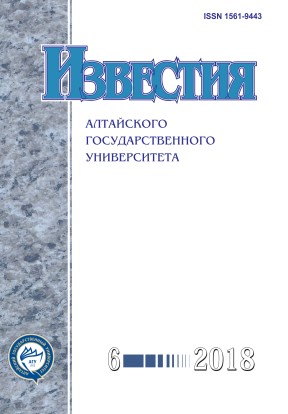
Izvestiya of Altai State University is a golden publisher, as we allow self-archiving, but most importantly we are fully transparent about your rights.
Authors may present and discuss their findings ahead of publication: at biological or scientific conferences, on preprint servers, in public databases, and in blogs, wikis, tweets, and other informal communication channels.
Izvestiya of Altai State University allows authors to deposit manuscripts (currently under review or those for intended submission to Izvestiya of Altai State University) in non-commercial, pre-print servers such as ArXiv.
Authors who publish with this journal agree to the following terms:
- Authors retain copyright and grant the journal right of first publication with the work simultaneously licensed under a Creative Commons Attribution License (CC BY 4.0) that allows others to share the work with an acknowledgement of the work's authorship and initial publication in this journal.
- Authors are able to enter into separate, additional contractual arrangements for the non-exclusive distribution of the journal's published version of the work (e.g., post it to an institutional repository or publish it in a book), with an acknowledgement of its initial publication in this journal.
- Authors are permitted and encouraged to post their work online (e.g., in institutional repositories or on their website) prior to and during the submission process, as it can lead to productive exchanges, as well as earlier and greater citation of published work (See The Effect of Open Access).