The Abuse of Rights in Corporate Relations

Abstract
This article discusses the problem of abuse of law in corporate relations, which is mainly related to the lack of effective private legal means of protection against unfair conduct by the participants of the corporation. It is stated that the rights of shareholders are increasingly exposed to various kinds of violations and, as a result, an increasing number of economic entities are involved in corporate conflicts. It is indicated that the activities of the joint-stock company depend on how honestly its members perform the responsibilities for financial and economic matters. Approaches in doctrine and in legislation to the concept of abuse of law are analyzed. A comparative legal analysis of this concept was carried out under the legislation of the Republic of Kazakhstan. Examples of judicial practice on corporate disputes are given in which courts have characterized actions of participants in corporate relations as abuse of law. It is noted that there are difficulties in applying Article 10 of the Civil Code of the Russian Federation in practice, since for the recognition of the action of abuse of right it is necessary to prove that this action is aimed solely at causing harm to another person.
Downloads
References
Покровский И.А. Основные проблемы гражданского права : серия: Классика российской цивилистики. — М., 2003.
Яценко Т.С. Категория шиканы в гражданском праве: история и современность. — М., 2003.
Шерстобитов А.Е. Злоупотребление правом (доктрина и практика) // Проблемы развития частного права : сборник статей к юбилею Владимира Саурсеевича Ема / отв. ред. Е.А. Суханов, Н.В. Козлова. — М., 2011.
Агарков М.М. Проблема злоупотребления правом в советском гражданском праве // Известия АН СССР. Отделение экономики и права. — 1946. — № 6.
Грибанов В.П. Осуществление и защита гражданских прав. — М., 2001.
Сазонова И.В. Квалификация поведения субъектов как злоупотребление гражданским правом : автореф. дис. ... канд. юрид. наук. — СПб., 2010.
Курбатов А.Я., Подмаркова А.С. Недопустимость злоупотребления правом как общеправовой принцип реализации прав // Хозяйство и право. — 2009. — № 2.
Молотников А.Е. Проблема злоупотребления правом в корпоративных конфликтах // Слияния и поглощения. — 2004. — № 12.
Савицкий П.В. Арбитражная практика рассмотрения споров, связанных с применением пунктов 1 и 2 ст. 10 ГК РФ // Федеральный арбитражный суд Уральского округа. Практика. Обзоры. Комментарии. — 2004. — № 3–4.
Обзор судебной практики применения законодательства о юридических лицах (гл. 4 ГК РФ) (утв. Президиумом Арбитражного суда Северо-Кавказского округа 06.07.2018) // СПС «КонсультантПлюс».
Шиткина И.С. Корпоративное право в таблицах и схемах. — 2-е изд., перераб. и доп. — М., 2016.
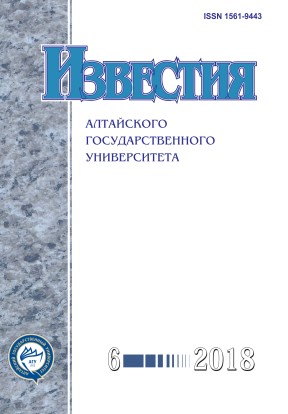
Izvestiya of Altai State University is a golden publisher, as we allow self-archiving, but most importantly we are fully transparent about your rights.
Authors may present and discuss their findings ahead of publication: at biological or scientific conferences, on preprint servers, in public databases, and in blogs, wikis, tweets, and other informal communication channels.
Izvestiya of Altai State University allows authors to deposit manuscripts (currently under review or those for intended submission to Izvestiya of Altai State University) in non-commercial, pre-print servers such as ArXiv.
Authors who publish with this journal agree to the following terms:
- Authors retain copyright and grant the journal right of first publication with the work simultaneously licensed under a Creative Commons Attribution License (CC BY 4.0) that allows others to share the work with an acknowledgement of the work's authorship and initial publication in this journal.
- Authors are able to enter into separate, additional contractual arrangements for the non-exclusive distribution of the journal's published version of the work (e.g., post it to an institutional repository or publish it in a book), with an acknowledgement of its initial publication in this journal.
- Authors are permitted and encouraged to post their work online (e.g., in institutional repositories or on their website) prior to and during the submission process, as it can lead to productive exchanges, as well as earlier and greater citation of published work (See The Effect of Open Access).